Remote Patient Monitoring Devices Market: Size, Growth, and Key Trends

We reviewed government datasets from the HHS Office of Inspector General, CMS, and VA Connected Care alongside market research from Grand View Research and Fortune Business Insights to benchmark the remote patient monitoring devices market as of mid-2026. For decision-makers evaluating the remote patient monitoring market size, device category trends, and the CMS policy changes taking shape for 2027, the data below covers current market standing, growth projections through 2033, and what the regulatory environment means for procurement decisions being made right now.
Remote Patient Monitoring Devices Market: Key Figures at a Glance
| Metric | Value | Year |
| Global RPM system market | $26.0 billion | 2025 |
| Global RPM devices and services market | $59.92 billion | 2025 |
| Compound Annual Growth Rate (CAGR) (2026–2033) | 20.0% | — |
| North America market share | 40.4% | 2025 |
| U.S. Medicare RPM payments | $536 million | 2024 |
| Medicare RPM enrollees | ~970,000 | 2024 |
| VA RPM-HT hospital admission reduction | 41% | Current |
How Large Is the Remote Patient Monitoring Devices Market, and Where Is It Heading?
| Scope | 2025 Market | 2026 Projection | Long-Term Projection | CAGR (from 2026 projection to the long-term projection) |
| Global RPM system market | $26.0B | $30.9B | $110.7B by 20331 | 20.0% |
| Global RPM devices and services market | $59.92B | $71.29B | $289.77B by 20342 | 19.16% |
1. Projection from https://www.grandviewresearch.com/industry-analysis/remote-patient-monitoring-devices-market
2. Projection from https://www.fortunebusinessinsights.com/remote-patient-monitoring-devices-market-106328
The global remote patient monitoring devices market is on track to more than quadruple by 2033. The devices and systems segment is projected to grow from $30.9B at a 20% annual rate, and the broader market, including staffed clinical monitoring services, is projected to grow from $71.29B to $289.77B by 2034.
Both figures reflect the same underlying shift. When CMS established permanent Medicare reimbursement codes for RPM in 2019, the service moved from a largely out-of-pocket expense to a standard billable line of care. Additionally, chronic disease prevalence across an aging population, combined with financial pressure to reduce hospital admissions, has driven adoption steadily upward since.
For healthcare providers thinking about the future of healthcare, a 20% growth rate compounding through 2033 is an operational signal. Organizations that build RPM programs around integrated platforms, where monitoring data from multiple device types feeds a single longitudinal patient record, avoid the fragmentation and compliance exposure that come from assembling point solutions as the market matures. With CMS simultaneously expanding which providers can bill for RPM and proposing new restrictions on how it can be delivered, the infrastructure decisions made today will determine how well a program holds up in 2027 and beyond.
A Look Across Key RPM Device Categories
| Category | Market Position | Key Data Point |
| Cardiac monitoring | Largest U.S. segment | 29% of U.S. RPM market in 2024 |
| Glucose and diabetes monitoring | Second by application | 13.7% of global applications in 2025 |
| Vital signs and ambient monitoring | Fastest-growing product segment | Fastest-growing, 2026 |
| Respiratory monitoring | Chronic respiratory care | $4.09B in 2024, 4.31% CAGR |
| Neurological and mobility (RTM) | New CMS-reimbursed segment | 373% growth, 2022–2023 |
What's driving each segment:
- Cardiac: The cost of an undetected arrhythmia progressing to stroke or long-term disability far outweighs the annual cost of continuous remote surveillance, and payers have formalized that comparison in coverage decisions.
- Glucose: CMS expanding CGM coverage to a broader diabetic population shifted procurement from individual patients to health systems and Medicaid programs managing large chronic populations at scale.
- Vital signs: Nearly half of U.S. adults have high blood pressure, and RPM hypertension programs have generated enough hospitalization reduction data to move from clinical evidence into payer actuarial logic.
- Respiratory: COPD and sleep apnea drive steady clinical demand. At $4.09 billion in 2024 with a 4.31% annual growth rate, this segment grows more slowly than the broader RPM market but remains a standard component in programs managing high-acuity, chronically ill patients.
- RTM: CMS added RTM billing codes in 2022, and utilization grew 373% in the first two years as providers formalized services they were already delivering once the reimbursement pathway existed.
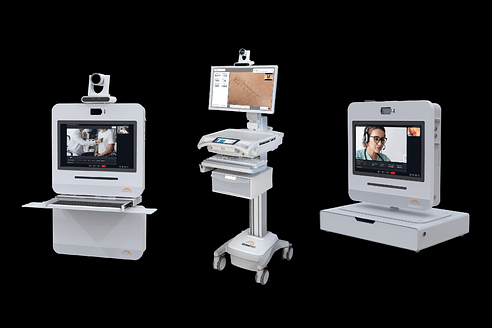
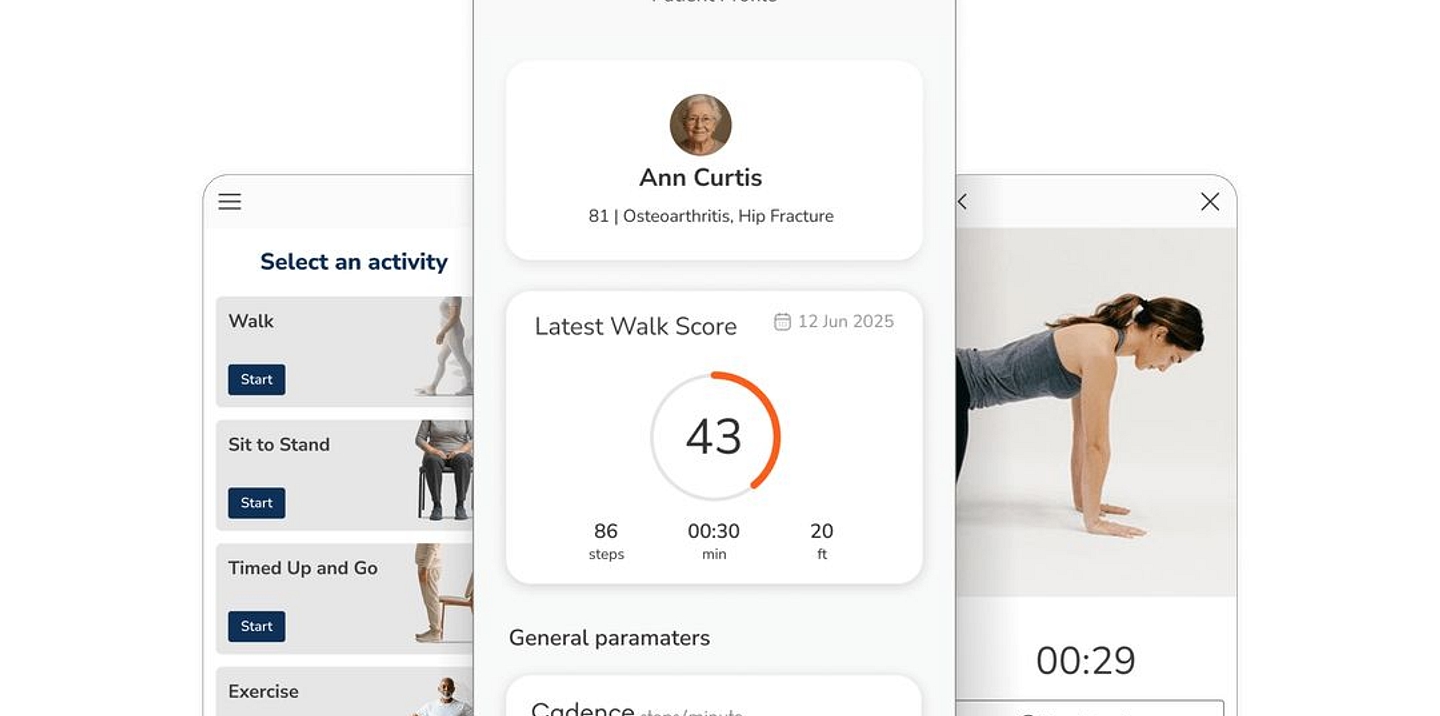
GlobalMed®’s iAmbientHealth™ covers the vital signs and respiratory segments passively, with no wearables, apps, or patient action required. It captures heart rate, respiratory rate, movement, and bed exits through built-in cellular connectivity, and enrolled patients have shown a meaningful reduction in hospital readmissions. For the neurological and mobility segment, OneStep turns any smartphone into a clinical-grade gait and mobility analysis tool, billable under CPT codes 98975, 98977, 98980, and 98981.
CMS Policy Changes and What They Mean for the RPM Devices Market
| Policy | Status | Direct Impact |
| RPM billing expanded to Federally Qualified Health Centers (FQHCs) and Rural Health centers (RHCs) | Active: January 1, 2025 | Made ~1,400 FQHCs and ~4,000 RHCs eligible for Medicare RPM reimbursement for the first time |
| CMS proposed rule CMS-1848-P (CY 2027 Physician Fee Schedule) | Proposed July 14, 2026; comment period closes September 14, 2026; final rule expected around November 2026; effective January 1, 2027 if finalized | Would require an initiating visit for RPM/RTM, generally limit Medicare-payable clinical staff time to employees of the billing practitioner or practice rather than contracted clinical personnel, extend the established-patient requirement to RTM, and revalue several RPM/RTM codes. |
| Rural Patient Monitoring Access Act | Advancing in Congress, July 2026 | Would establish a temporary geographic payment floor for Medicare RPM and condition payment on capabilities including real-time physiologic data transmission, EHR compatibility as needed, and the ability to respond to physiologic anomalies directly or through a contractor. |
The federal policy environment for RPM is evolving along two tracks: expanding access to remote monitoring while placing greater emphasis on how those services are delivered. Starting in January 2025, FQHCs and RHCs were allowed to receive separate Medicare payment for RPM and RTM services, creating a clearer reimbursement pathway for thousands of rural and underserved providers.
Why Federal RPM Policy Is Moving Toward Integrated Care
The next phase of federal RPM policy increasingly takes into account how monitoring connects to clinical care. Take the CMS's proposed CY 2027 Physician Fee Schedule, for example. If finalized, the rule would require an initiating visit at the start of RPM or RTM services and would generally limit Medicare-payable clinical staff time used to furnish those services to staff directly employed by the billing practitioner or practice rather than clinical personnel supplied by a third-party contractor. CMS is also proposing changes to the valuation of several RPM and RTM codes. Together, the proposals place greater emphasis on practitioner oversight, continuity of care, and integration of remote monitoring into the patient's broader care plan.
Congress is approaching the same issue from a different direction. In July 2026, H.R. 3108, the Rural Patient Monitoring Access Act, advanced unanimously through the House Ways and Means Committee. This would establish a temporary national payment floor for geographic adjustments affecting Medicare RPM reimbursement, reducing the payment disadvantage that can occur in lower-cost geographic areas. It would also require RPM devices to be capable of transmitting relevant physiologic data in real time in an EHR-compatible format, as needed, and require suppliers to be capable of responding to physiologic anomalies directly or through a contractor.
The CMS proposal and H.R. 3108 differ in how clinical support could be organized and reimbursed, but both point toward a model in which RPM is tied to an initiating practitioner, interoperable data, and an accountable response to physiologic changes rather than being treated as a standalone device or data source.
Medicare and VA Remote Patient Monitoring by the Numbers
| Metric | Value | Year |
| Medicare RPM payments | $15 million | 2019 |
| Medicare RPM payments | $311 million | 2022 |
| Medicare RPM payments | $408 million | 2023 |
| Medicare RPM payments | $536 million | 2024 |
| Medicare RPM enrollees | ~970,000 | 2024 |
| Enrollees not receiving all required components | 43% | 2024 data |
| VA RPM-HT Veterans served annually | 132,000+ | Current |
| VA RPM-HT hospital admission reduction | 41% | Current |
| VA RPM-HT hospital days reduction (among those admitted) | 70% | Current |
The payment trajectory in the table is primarily a policy story. CMS establishing permanent reimbursement codes for RPM in 2019 converted the service from largely out-of-pocket to a standard billable line of care, opening the program to health systems and providers who had no viable billing path before. Once that changed, enrollment followed, reaching approximately 970,000 Medicare beneficiaries by 2024.
The government's own audit of those programs adds an important layer. The HHS Office of Inspector General's 2024 review found that 43% of enrolled patients did not receive all required RPM service components. For health systems evaluating vendors, that finding is a procurement signal. Any RPM platform under consideration should be built to document and deliver all required components across every enrolled patient, a standard the proposed 2027 vendor rule will likely make mandatory for the programs that remain.
The VA data in the table reflects what follows when the delivery model is complete. Across a dispersed, high-acuity population managing multiple chronic conditions, the VA RPM-HT program has produced a 41% reduction in hospital admissions and a 70% reduction in hospital days among enrolled Veterans. For providers in DoD networks, rural FQHCs, or correctional health systems managing comparable patient profiles, those benchmarks represent what a complete, integrated RPM program can reasonably deliver.
Where the RPM Market Is Heading and What That Means for Providers
Every metric in this piece points in the same direction. The remote patient monitoring devices market is growing. For healthcare providers, the question has shifted from whether to build an RPM program to what the infrastructure behind that program should look like.
The providers best positioned for where the market is heading are building around an integrated monitoring ecosystem, one where solutions covering multiple clinical categories route into a single platform and feed a unified patient record that supports complete, auditable service delivery. GlobalMed's iAmbientHealth™ and OneStep represent that approach in practice. For programs in VA, DoD, correctional, or rural environments, GlobalMed brings more than 20 years of federal deployment experience and is the first to have the Authority to Operate on DoD networks for digital health.