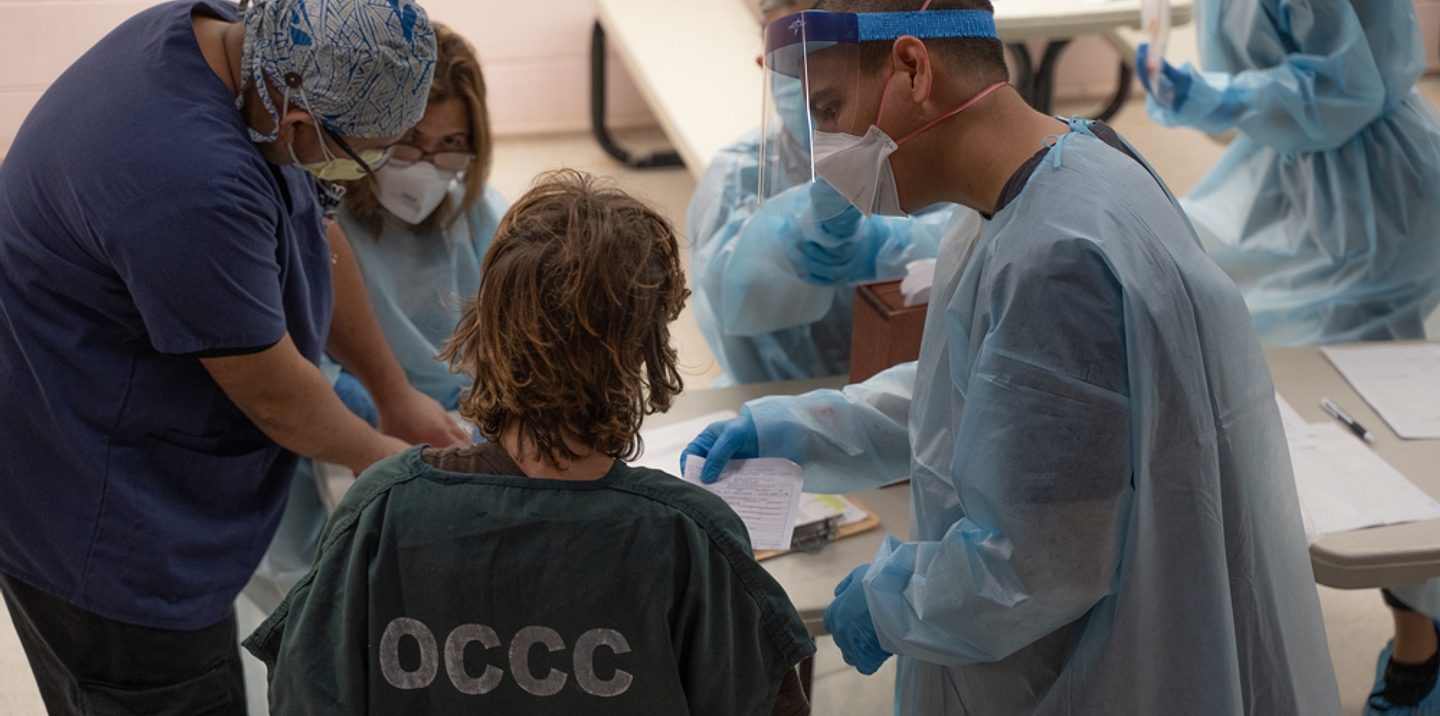
Correctional Telemedicine: Reducing Risk & Increasing Safety

Nearly one million incarcerated individuals depend on rural hospitals for routine off-site and emergency care. Every trip outside the facility carries risk, so correctional agencies invest heavily in security. They notify security teams at both the facility and the hospital of each patient's custody level (minimum, medium, or maximum) and assign armed officers to every outside visit and inpatient stay. Once there, patients may remain shackled, handcuffed, and under guard around the clock.
Even with these precautions, some have escaped, attacked officers and hospital staff, and disappeared into the community. In 2013, an emergency visit at Massachusetts Eye and Ear Infirmary turned violent when an incarcerated patient fought his guards. He was shot in the chest, and a deputy sheriff was shot in the leg.
At University Medical Center in Lubbock, Texas, a patient in custody took two nurses hostage and assaulted them. However remote the odds, the threat of escape or violence follows every transport that leaves the facility for care.
Benefits of Virtual Care
- Incarcerated patients can get specialty care inside their own facility through virtually assisted exams, so no transport is needed and the risk of escape or attack that comes with it goes away.
- Clinicians who are hesitant to treat incarcerated patients in-person can provide care remotely, which helps correctional facilities recruit and retain providers.
- Hospitals spend less on the heavy security that incarcerated patient care requires, so they have more budget and staff time for their other patients.
Case Study California Correctional Health Care Services (CCHCS)
California Correctional Health Care Services (CCHCS) runs a state-operated correctional managed care program. In 2010, CCHCS began using GlobalMed solutions to improve care for incarcerated patients and cut costs by keeping that care on site.
- Incarcerated patients receive primary care and access to more than 30 medical specialties virtually, including cardiology, dermatology, gastroenterology, HIV, infectious disease, nephrology, orthopedics, pulmonology, rheumatology, and urology.
- Administrators have improved public safety and lowered medical transportation costs.
- CCHCS has strengthened staff recruitment and retention and maintained provider coverage during military and maternity leave.
- Annual virtual encounters grew from 16,000 in 2010 to more than 70,000 in 2018.
- Specialist access expanded from 30 specialists in four locations to 200 specialists in 22 locations by 2018.
- Healthcare and transportation savings topped $25 million in 2017–18.