Modernizing Student-Athlete Care Delivery: An Integrated Telehealth Model for Collegiate Athletics

Executive Summary
NCAA athletic programs face converging pressures that traditional care models were not designed to address at scale or with the speed now required. More than 500,000 student-athletes across approximately 1,100 member schools require comprehensive medical support, placing significant operational demands on institutions, often with limited athletic trainer staffing, to provide care for an expanding population with complex needs. Policy requirements around mental health screening, concussion management, and independent medical care continue to expand, with Division I schools now required to demonstrate compliance with mental health best practices as well as responsive medical care.
Student-athletes often need immediate care decisions for injuries where delays can have a significant impact on outcomes. Earlier, more responsive care leads to better outcomes. Research shows that athletes removed from play immediately after a suspected concussion return approximately two days faster than those who continue playing ¹ and schools with lower student-athlete-to-clinician ratios experience 9.5% lower injury incidence, 2.7% lower reinjury incidence, and 6.7% lower concussion incidence.²
This white paper explores the need for responsive and flexible medical care solutions for college athletes and quantifies the operational and financial value of this approach for NCAA programs.
1. A Changing Healthcare Landscape for Collegiate Athletics
The scope of the challenge becomes clear through recent workforce data. The National Athletic Trainers' Association and American College of Sports Medicine surveyed more than 1,120 collegiate athletic trainers across all division levels in 2024, documenting what many in the field already knew: college athletics faces a healthcare professional labor crisis with difficulty recruiting, hiring, and retaining talent.³ Sixty-five percent of respondents had taken on added responsibilities without corresponding increases in compensation.⁴
This staffing reality coincides with significant injury volume.
Early Care Leads to Better Outcomes
CDC analysis of sports-related injury data identified 1,053,370 injuries during five academic years across 176.7 million athlete-exposures.⁵ The same analysis found that more injuries occurred in practice than in competition for all sports except men's ice hockey and baseball.⁶ Athletic departments require responsive care models during training operations when most athletes are at risk.
| Metric | Finding |
| Lower injury incidence with better trainer/student ratios | 9.5% reduction |
| Lower reinjury incidence with better trainer/student ratios | 2.7% reduction |
| Lower concussion incidence with better training/student ratios | 6.7% reduction |
The relationship between athletic trainer staffing and outcomes matters substantially. Research shows that schools with lower student-athlete-to-clinician ratios experienced 9.5% lower injury incidence, 2.7% lower reinjury incidence, and 6.7% lower concussion incidence compared to schools with average staffing levels.⁷ These findings suggest that extending clinical reach produces measurable benefits, yet hiring additional staff remains financially and practically unfeasible for most programs.
New Policies Require Expanded Care
Policy expectations compound these operational challenges. NCAA Mental Health Best Practices, effective August 2024, require all student-athletes to be screened for psychological distress at least once annually using validated screening tools.⁸ Division I schools faced their first attestation deadline in November 2025 and must now demonstrate ongoing compliance.⁹ Updated concussion management guidance that took effect in January 2024 requires schools to align practices with evidence-based protocols and maintain unchallengeable authority for medical decisions by healthcare providers.¹⁰
Traditional Care Models Need Support
Traditional care delivery models assume athletes can wait for scheduled appointments, travel to external facilities for imaging or specialist consultation, and return for multiple follow-up visits. These assumptions are increasingly difficult to sustain when injury volume is high, staff capacity is constrained, compliance requirements are expanding, and the evidence shows that immediate intervention produces better outcomes. Dynamic care models can help address these gaps and expand the scope of care.
2. Quantifying the Dimensions of Need
Concussion Management
Concussion remains a measurable, ongoing issue across NCAA sports. Researchers analyzing 23 NCAA sports from 2014-15 through 2018-19 reported 3,497 sport-related concussions from 8,474,400 athlete-exposures, yielding an overall rate of 4.13 per 10,000 athlete-exposures.¹¹ Competition concussion rates were 4.12 times higher than practice rates, with men's ice hockey (7.35 per 10,000 AE) and women's soccer (7.15 per 10,000 AE) showing the highest incidence.¹²
The NCAA CARE study provided critical evidence about the value of immediate response. Athletes removed from play immediately after suspected concussion returned to competition approximately two days faster than those who continued playing after injury.¹³ This finding has important implications given that two-thirds of concussions in contact sports occur during practice and training sessions, not competition.¹⁴ Programs benefit from responsive assessment capabilities in training environments, not just sideline protocols for game day.
Return-to-play timelines have lengthened substantially as understanding of concussion care has evolved. NCAA CARE data showed athletes returning to play in an average of 14.3 days in the mid-2010s, compared to 6.7 days in a 2001 NCAA football study.¹⁵ The 2023 Amsterdam international concussion consensus recommends relative rest for 24 to 48 hours after injury, followed by gradual return-to-learn and return-to-sport progression.¹⁶ Managing these extended timelines requires further medical care, including structured protocols, objective monitoring, and comprehensive documentation.
Lower Extremity Injuries: Long Recovery, High Stakes
Lower extremity injuries represent another category where timing and continuous monitoring matter significantly. NCAA data indicates that more than 2,000 student-athletes in 15 high-risk sports sustain ACL injuries each year.¹⁷ These injuries increased at a rate of 1.3% annually over a 16-year period in NCAA injury surveillance data.¹⁸ Recovery typically requires six to eight months, though some athletes need a full year of rehabilitation.¹⁹
The financial impact is substantial. ACL reconstruction and rehabilitation costs range from $5,000 to $17,000 per patient, with estimated long-term societal costs reaching $38,000 per patient when considering factors like reduced activity levels and early-onset arthritis.²⁰ Traditional rehabilitation approaches rely on periodic in-person assessments, giving clinicians limited visibility into how athletes are moving between appointments, whether they are compensating in problematic ways, or if progress has stalled. Objective, continuous monitoring that tracks movement patterns and functional progress in real-world conditions could bridge these gaps and support more confident, data-driven return-to-play decisions.
Mental Health: Mandate Meets Massive Need
The NCAA's 2022-23 Association-wide study included more than 23,000 student-athletes, providing a substantial data set on mental health concerns.²¹ Among women's sports participants, 44% reported feeling overwhelmed and 35% reported feeling mentally exhausted. For men's sports participants, 17% reported feeling overwhelmed and 16% reported mental exhaustion.²² Yet only approximately 50% of student-athletes reported feeling comfortable seeking support from a licensed mental health provider on campus.²³
The Compliance Challenge
NCAA Mental Health Best Practices now require all student-athletes to be screened for psychological distress at least once annually using validated screening tools.²⁴ Division I schools faced their first attestation deadline in November 2025 and must now demonstrate ongoing compliance.²⁵ This mandate creates operational pressure for athletic departments already managing constrained resources. Schools need scalable systems that can efficiently screen entire athletic populations, triage results to appropriate levels of care, document compliance, and provide accessible support options. Counseling-based models alone may not be sufficient to meet both the volume requirements and accessibility barriers that prevent some of athletes from seeking care.
The Fragmented Care Problem
Beyond compliance, the broader challenge is care fragmentation. Research examining more than 1.1 million patients with chronic conditions found that fragmented care significantly increased emergency department visits, diagnostic testing, and healthcare costs.²⁶ When care is delivered across multiple disconnected providers and settings with poor communication and coordination, patients experience worse outcomes.²⁷
For student-athletes managing both physical and mental health needs, this fragmentation means sports medicine staff may not be aware of mental health struggles that could affect injury recovery, or mental health providers may not understand how physical injuries impact psychological well-being. Studies show that fragmented care is associated with increased hospital admissions, longer lengths of stay, and higher costs precisely because care coordination breaks down.²⁸ Athletic departments need integrated systems where physical health monitoring, injury management, rehabilitation tracking, and mental health screening share data and inform each other. Scalable screening tools, low-barrier access points, and self-guided resources become necessary not just for compliance, but for creating the care continuity that produces better outcomes.
3. GlobalMed: Comprehensive Care in Real Time
GlobalMed addresses these converging needs through an integrated platform rather than point solutions. The system combines multiple technologies that work together to support the full spectrum of student-athlete care.
| Problem Addressed | Solution | Primary Function | Key Capabilities |
| Delayed care access when athletes are at satellite facilities, during travel, or need immediate specialist input | eNcounter | Virtual care with clinical diagnostic tools | Remote examinations, vital signs capture, visual exams with digital cameras/otoscopes, specialist consultation |
| Injuries occur during practice at remote training sites without clinical capability nearby | Transportable Exam Backpack | Mobile comprehensive care | Lightweight backpack with laptop and diagnostic tools, brings clinical capability to remote locations |
| Need for responsive care in challenging environments (sidelines, events, austere locations) | Transportable Exam Station | Ruggedized clinical environment | Wi-Fi/cellular/SATCOM connectivity, functions in austere areas, transforms any location into clinic |
| Imaging delays requiring external facility transport, scheduling bottlenecks, time lost to diagnosis | OXOS Handheld X-Ray | Point-of-care imaging | Immediate orthopedic and sports medicine imaging can reduce the need for external facility transport and associated delays |
| Limited visibility into rehabilitation between appointments, subjective recovery assessments, reinjury risk | OneStep | Remote Therapeutic Monitoring | Smartphone-based gait analysis, 30+ objective indicators, no wearables needed, billable CPT codes |
| 50% of athletes uncomfortable seeking mental health support, need for scalable annual screening | Canary Speech | AI-powered vocal biomarker screening | Analyzes how patients speak for anxiety, depression, cognitive impairment detection |
| Barriers to mental health access, limited counseling capacity, stigma around seeking traditional services | MoodHacker | Self-guided behavioral health | CBT-based interventions, resilience building, reduces barriers to mental health support |
The Problem: When an athlete presents with an injury during practice at a satellite facility or during travel, immediate assessment may not always be feasible. Athletic trainers must either transport the athlete to a medical facility or wait to schedule an appointment, which can delay care decisions and potentially extend recovery timelines. Specialist consultation adds another layer of delay and coordination.
The Solution: eNcounter provides the foundation for virtual care delivery with clinical diagnostic capability. Athletic trainers or team physicians can conduct remote examinations using integrated tools that capture vital signs, perform visual exams with digital cameras and otoscopes, and facilitate specialist consultation. When an athlete presents with an injury during practice at a satellite facility or during travel, immediate virtual assessment can determine whether the situation requires urgent intervention or can be monitored, reducing unnecessary external referrals while ensuring serious concerns receive appropriate attention.
The Problem: Many injuries occur during practice sessions across multiple training facilities, yet clinical capability is typically centralized in athletic training rooms or medical clinics. When injuries happen at remote locations or during away competitions, responsive care delivery becomes challenging without portable clinical tools.
The Solution: Transportable Exam Backpack and Transportable Exam Station extend this capability to various locations. The lightweight backpack delivers comprehensive virtual examinations wherever needed, equipped with a laptop and diagnostic tools that bring clinical capability to away games or remote training sites. The ruggedized exam station transforms challenging environments into functioning clinics, with Wi-Fi, cellular coverage, and SATCOM ensuring critical communication in even distant locales. This flexibility addresses the reality that most injuries occur during practice sessions across multiple facilities.
The Problem: When an athlete sustains a potential fracture or serious musculoskeletal injury, obtaining imaging typically requires transport to an external facility, scheduling, waiting, and coordination of results. These delays extend the time to diagnosis and postpone treatment decisions when immediate clarity could expedite care.
The Solution: OXOS handheld x-ray technology adds point-of-care imaging capability. Point-of-care imaging allows immediate assessment, faster clinical decisions, and reduced downstream referrals for injuries that imaging can rule out or confirm on site.
The Problem: Traditional rehabilitation approaches rely on periodic in-person assessments, giving clinicians limited visibility into how athletes are moving between appointments, whether they are compensating in problematic ways, or if progress has stalled. This gap is particularly significant for the 2,000-plus annual ACL injuries requiring six to eight months of rehabilitation.
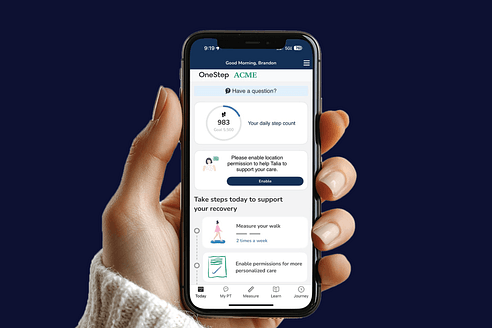
The Solution: OneStep provides objective rehabilitation monitoring for lower extremity injuries through Remote Therapeutic Monitoring. The platform transforms any smartphone into a clinical-grade motion lab, measuring over 30 objective indicators and delivering instant gait analysis and mobility insights without additional hardware or wearables. Clinicians monitor progress, detect risks, and make informed decisions based on real-life conditions. For the 2,000-plus annual ACL injuries requiring months of rehabilitation, this continuous visibility supports earlier identification of complications and more confident return-to-play decisions based on objective functional data rather than subjective assessments alone.
The Problem: Athletic departments must screen all athletes annually per NCAA requirements, yet only approximately 50% of student-athletes feel comfortable seeking support from traditional mental health providers on campus. Limited counseling appointment availability cannot meet the mental health support needs across entire athletic departments, creating wait times and leaving athletes without resources between appointments.
The Solution: Canary Speech and MoodHacker address mental health screening and support requirements. Canary Speech is the leading vocal biomarker platform that provides a clinically-proven, secure, and cost-effective way to detect and monitor behavioral health conditions. By analyzing how patients speak rather than what they say, the AI-powered technology delivers objective, real-time insights across anxiety, depression, cognitive impairment, and other conditions. This also prevents student athletes who don't feel comfortable or able to seek behavioral or mental health services from going untreated. MoodHacker offers self-guided cognitive behavioral interventions based on CBT, positive psychology, and self-determination theory. This combination helps athletic departments meet annual screening requirements while providing resources for athletes who are uncomfortable with traditional counseling or need support between appointments.
The integration of these components matters as much as their individual capabilities. Data flows between systems, creating a unified view of each athlete's health status. A concussion documented in eNcounter connects to monitoring through wellness tools. Rehabilitation progress tracked in OneStep informs clinical decisions made during virtual or in-person follow-ups. Mental health screening results integrate with overall health records. This continuity reduces documentation burden, supports better clinical decisions, and provides the structured data necessary for NCAA compliance reporting.
4. Operational and Financial Value
The value proposition of a unified virtual care system spans multiple dimensions that traditional ROI calculations often miss.
Avoided External Medical Spend
When care can be delivered on campus or virtually, institutions avoid outside physician visits, urgent care visits, imaging referrals, and duplicative follow-up appointments. The cost difference is substantial: while in-person acute care visits average $136 to $176, telehealth visits average only $40 to $50 per visit.²⁹ Studies show that telehealth users experienced a reduction of $1,814 per patient per year in total medical costs and 88.6 fewer emergency department visits per 1,000 persons annually.³⁰ Point-of-care imaging through OXOS reduces external radiology costs. Virtual specialist consultation through eNcounter eliminates some referrals. Each avoided external visit produces direct savings and reduces the administrative burden of coordinating external care.
Extended Staff Capacity
Virtual care can eliminate transport time, point-of-care imaging can eliminate scheduling coordination, and remote monitoring can reduce low-value follow-up appointments, allowing athletic trainers to serve more athletes without working additional hours. This capacity extension has economic value even when it does not appear on a billing line.
Reduced Reinjury and Complication Costs
The same research showing better outcomes with improved staffing ratios also documented 2.7% lower reinjury rates.³¹ While GlobalMed does not add additional staff, the platform extends clinical reach in ways that may help close responsiveness gaps. Continuous rehabilitation monitoring through OneStep could identify problems before reinjury occurs. Immediate concussion assessment provides the two-day return-to-play advantage that NCAA CARE data demonstrated. Mental health screening may prevent crises that would otherwise require more intensive intervention. These avoided complications have significant economic value, given the $5,000 to $38,000 cost range for major injuries like ACL tears.
Operational Efficiency
Manual documentation, scheduling coordination, transport logistics, and follow-up communication consume substantial staff time. Integrated systems reduce this burden. NCAA's Injury Surveillance Program notes that participation requires only 15 to 20 minutes per week per sport when compatible EMR systems are used.³² Similar efficiencies apply to mental health screening documentation, concussion protocol tracking, and rehabilitation progress reporting. The platform generates compliance-ready data as a byproduct of clinical care rather than requiring separate administrative work.
Compliance and Strategic Value
Schools need systems that can demonstrate annual screening compliance, appropriate referral processes, and accessible resources. The platform provides this infrastructure. Updated concussion management requirements need documented protocols and trackable outcomes. Research partnerships and grant applications benefit from structured data collection capabilities. These strategic benefits support institutional goals beyond immediate cost savings.
| Solution Component | Operational Impact | Value Driver | Measurable Metrics |
| eNcounter and Transportable Systems | Faster access, remote exams, on-campus/sideline care | Fewer outside visits, reduced transport, lower event disruption | Cost per referral avoided; days to evaluation; transport hours saved |
| OXOS Handheld X-Ray | Point-of-care imaging | Reduced external imaging spend, fewer unnecessary orthopedic referrals | Cost per external x-ray avoided; imaging turnaround time reduction |
| OneStep | Objective lower-extremity rehab tracking | Fewer in-person rehab visits, better productivity, lower reinjury risk, earlier problem identification | In-person visits avoided; therapist hours saved; reinjury reduction percentage |
| Canary Speech and MoodHacker | Scalable behavioral support and screening | Better resource triage, early detection, reduced counseling burden, meets annual screening mandate | Referral prioritization rate; waitlist reduction; self-guided utilization; screening completion rate |
| Integrated Data Capture | Documentation efficiency and compliance support | Staff time savings, easier research participation, improved reporting readiness | Hours saved per week; documentation time per encounter; compliance reporting time |
| Concussion Protocol Support | Structured tracking and monitoring | Immediate assessment advantage, protocol adherence documentation, research-quality data | Time from suspicion to evaluation; 2-day return-to-play advantage; protocol compliance rate |
5. Implementation and Integration
The platform works within existing institutional infrastructure rather than requiring wholesale replacement of systems. Integration with current EMR platforms allows data to flow between GlobalMed tools and existing health records, reducing adoption friction and maintaining continuity of care.
Deployment can be phased according to institutional priorities. A program might begin with mental health screening tools to address compliance requirements, then add virtual care capability for sports medicine, then incorporate rehabilitation monitoring for high-risk sports. This modular approach allows schools to build implementation experience and demonstrate value before expanding to additional use cases.
The platform meets HIPAA requirements and NCAA privacy standards. Student-athlete consent protocols integrate with the workflow. Security measures protect data transmission and storage. Training support helps staff adopt new workflows. While the interfaces are designed for intuitive use, structured training ensures that athletic trainers, team physicians, mental health providers, and administrative staff understand how to use each component effectively.
| Phase | Focus Area | Timeline | Key Outcomes |
| Phase 1 | Mental health screening (Canary/MoodHacker) | Months 1-3 | Meet annual screening mandate; establish baseline data; demonstrate compliance readiness |
| Phase 2 | Virtual care and point-of-care imaging (eNcounter, OXOS) | Months 3-6 | Reduce external referrals; faster injury assessment; quantify transport time savings |
| Phase 3 | Rehabilitation monitoring (OneStep) | Months 6-9 | Track high-risk sport recoveries; gather objective return-to-play data; identify reinjury patterns |
| Phase 4 | Full integration and expansion | Months 9-12 | Scale to full athletic department; optimize workflows; measure comprehensive ROI |
6. Conclusion
Traditional collegiate athletics healthcare models are increasingly challenged to meet current demands. Injury volume is too high, staff capacity is too constrained, and most importantly, the window for intervention is too narrow.
| Aspect | Traditional Model | GlobalMed Integrated Platform |
| Timing | Scheduled appointments, days of delay | Immediate assessment and intervention |
| Location | Centralized clinic, external facilities | Point-of-care, sideline, training facilities |
| Monitoring | Episodic in-person check-ins | Continuous remote monitoring with objective data |
| Mental Health | In-person counseling only | Scalable screening + self-guided + traditional services |
| Documentation | Manual, fragmented across systems | Integrated, compliance-ready, research-quality |
| Staff Impact | Time spent on transport and coordination | Time spent on direct patient care |
| Compliance | Separate administrative burden | Generated as a byproduct of care delivery |
| Data Integration | Siloed across care episodes | Unified athlete health record |
NCAA programs need real-time care delivery integrated across physical performance, injury management, rehabilitation, and mental health. They need point-of-care diagnostic capability in training environments where most injuries occur. They need tools that extend staff capacity rather than consuming more time. They need systems that generate compliance documentation as a byproduct of care delivery.
GlobalMed provides this comprehensive approach. The platform addresses acute injury response, chronic care management, physical rehabilitation, mental health screening, and concussion protocols through integrated components that share data and support clinical decisions. Institutions can deliver better care, meet expanding policy requirements, operate more efficiently, and quantify the resulting value.
Athletic departments operate under workforce constraints that are unlikely to be fully resolved through traditional hiring alone. Student-athletes deserve comprehensive support. Programs that implement integrated telehealth platforms now will demonstrate measurable outcomes, build institutional expertise, and position themselves to lead as NCAA policy expectations continue to evolve.
Take Action
GlobalMed's integrated telehealth platform provides NCAA programs with comprehensive tools for modern student-athlete care delivery. From immediate injury assessment to long-term mental health support, the system addresses every dimension of collegiate athletics healthcare.
Contact GlobalMed to schedule a consultation and learn how integrated care delivery can support your program's goals.
+1 (480) 922-0044 [email protected] globalmed.com
References
- NCAA. "Researchers Discuss Initial CARE Concussion Study Findings." January 31, 2017. https://www.ncaa.org/news/2017/1/31/researchers-discuss-initial-care-concussion-study-findings.aspx
- NATA/ACSM Joint Statement on College Athletic Training Workforce. May 1, 2024. https://www.nata.org/press-release/050124/national-athletic-trainers-association-and-american-college-sports-medicine-joint-statement
- Ibid.
- Ibid.
- CDC. "Sports-Related Injuries Among High School Athletes—United States, 2005–06 School Year." MMWR Weekly, December 9, 2006. https://www.cdc.gov/mmwr/preview/mmwrhtml/mm6448a2.htm
- Ibid.
- NATA/ACSM Joint Statement on College Athletic Training Workforce. May 1, 2024.
- NCAA. "Mental Health Best Practices." https://www.ncaa.org/sports/2016/5/2/mental-health-best-practices.aspx
- NCAA. "Education and Policy." April 23, 2024. https://www.ncaa.org/sports/2024/4/23/education-and-policy.aspx
- NCAA. "Concussion Safety Protocol Management." July 20, 2016. https://www.ncaa.org/sports/2016/7/20/concussion-safety-protocol-management.aspx
- Chandran A, et al. "Epidemiology of Concussions in National Collegiate Athletic Association (NCAA) Sports: 2014/15–2018/19." The American Journal of Sports Medicine, December 2021. https://journals.sagepub.com/doi/10.1177/03635465211060340
- Ibid.
- NCAA. "Researchers Discuss Initial CARE Concussion Study Findings." January 31, 2017.
- Ibid.
- Ibid.
- Patricios JS, et al. "Consensus Statement on Concussion in Sport: 6th International Conference on Concussion in Sport–Amsterdam, October 2022." British Journal of Sports Medicine, June 2023. https://bjsm.bmj.com/content/bjsports/57/11/695.full.pdf
- NCAA. "Obstacle Course." November 28, 2012. https://www.ncaa.org/news/2012/11/28/obstacle-course.aspx
- Ibid.
- Ibid.
- Mather RC, et al. "Societal and Economic Impact of Anterior Cruciate Ligament Tears." Journal of Bone and Joint Surgery, 2013.
- NCAA. "Student-Athletes Report Fewer Mental Health Concerns." December 13, 2023. https://www.ncaa.org/news/2023/12/13/media-center-student-athletes-report-fewer-mental-health-concerns.aspx
- Ibid.
- Ibid.
- NCAA. "Mental Health Best Practices." https://www.ncaa.org/sports/2016/5/2/mental-health-best-practices.aspx
- NCAA. "Education and Policy." April 23, 2024.
- Joo, J.Y. (2023). "Fragmented care and chronic illness patient outcomes: A systematic review." Nursing Open, 10, 3460-3473. https://pmc.ncbi.nlm.nih.gov/articles/PMC10170908/
- CMS. "Care Coordination." Centers for Medicare & Medicaid Services. https://www.cms.gov/priorities/innovation/key-concepts/care-coordination
- Mathematica. "New Studies Reveal that Fragmented Care Persists Despite Efforts to Improve Primary Care and Care Delivery." February 27, 2023. https://www.mathematica.org/news/new-studies-reveal-that-fragmented-care-persists-despite-efforts-to-improve-primary-care-and-care
- Health Recovery Solutions. "The True Cost of Telehealth." https://www.healthrecoverysolutions.com/blog/the-true-cost-of-telehealth
- Ganguli, I., et al. (2024). "Telehealth use during the early COVID-19 public health emergency and changes in medical spending and utilization." BMC Health Services Research, 24(235). https://pmc.ncbi.nlm.nih.gov/articles/PMC10895996/
- NATA/ACSM Joint Statement on College Athletic Training Workforce. May 1, 2024.
- NCAA. "NCAA Injury Surveillance Program." April 9, 2018. https://www.ncaa.org/sports/2018/4/9/ncaa-injury-surveillance-program.aspx
Appendix A: NCAA Compliance Requirements
August 1, 2024: NCAA Mental Health Best Practices effective for all member schools
November 2025: Division I attestation deadline passed; ongoing compliance required
January 15, 2024: Updated concussion management guidance took effect
Ongoing: Division I institutions must cover athletically related injury costs for at least two years after graduation or separation; annual psychological screening required for all student-athletes
Appendix B: Glossary of Terms
Athlete-Exposure (AE): One athlete participating in one practice or competition where injury risk exists
Point-of-Care: Medical testing or diagnosis conducted immediately at the location where the patient is present
Remote Therapeutic Monitoring (RTM): Technology-enabled monitoring of patient-reported data related to musculoskeletal system status
Return-to-Play (RTP): Graduated process of returning an athlete to full participation following injury
Return-to-Learn (RTL): Academic reintegration protocol following concussion or injury affecting cognitive function
Vocal Biomarkers: Measurable characteristics in voice recordings that correlate with mental or physical health indicators
About GlobalMed
Founded in 2002 by a Marine Corps Reserve Veteran to bring healthcare access to the underserved, GlobalMed has become a global leader in virtual health technology. The company's platform supports patients at any point in the continuum of care, with integrated software and data-capturing tools that empower providers to deliver evidence-based treatment and improved outcomes.
GlobalMed technology has enabled 100 million consultations in over 60 countries. Built to the highest standards of security and compliance, GlobalMed's virtual health platform has earned the U.S. Defense Health Agency's Authority to Operate on the DoD network. The technology serves diverse settings from the VA and White House Medical Unit to rural hospitals, correctional facilities, oil rigs, and remote villages worldwide.
Contact Information: +1 (480) 922-0044 [email protected] globalmed.com