Latest X-ray Technology: Portable Imaging for Remote and Virtual Care

The Latest X-ray Technology: The Advances Behind Portable Imaging
Recent progress in X-ray imaging is making exams more digital, mobile, data-rich, and connected. Here are a few examples of these developments and their positive impact on healthcare.
| X-ray advancement | What it does | Why it matters |
| Flat-panel digital radiography | Converts X-rays into digital images that can be displayed and transferred electronically | Removes film processing and supports faster image review |
| Wireless and mobile systems | Combines battery-powered equipment, wireless detectors, and compact computing | Allows imaging at the patient’s location |
| Dose optimization and image processing | Uses collimation, exposure controls, noise reduction, and artifact correction to support adequate image quality | Helps teams balance diagnostic value with radiation exposure |
| Dynamic digital radiography | Captures a sequence of images that shows movement over time | Adds functional information to selected radiographic exams |
| AI-assisted processing | Can support tasks such as noise reduction, image enhancement, quality checks, and prioritization | May help clinicians manage images more efficiently, but does not replace qualified interpretation |
| Interoperable image workflows | Uses standards-based storage and transfer to move studies between imaging, review, and telehealth systems | Allows remote clinicians to access images alongside other patient information during a telehealth encounter |
Together, these advancements are ushering in a new age of radiology that is more interconnected and more accessible. Images can now be captured at the point of care, reviewed for quality, processed or analyzed, and shared with the clinicians or specialists responsible for the patient’s care.
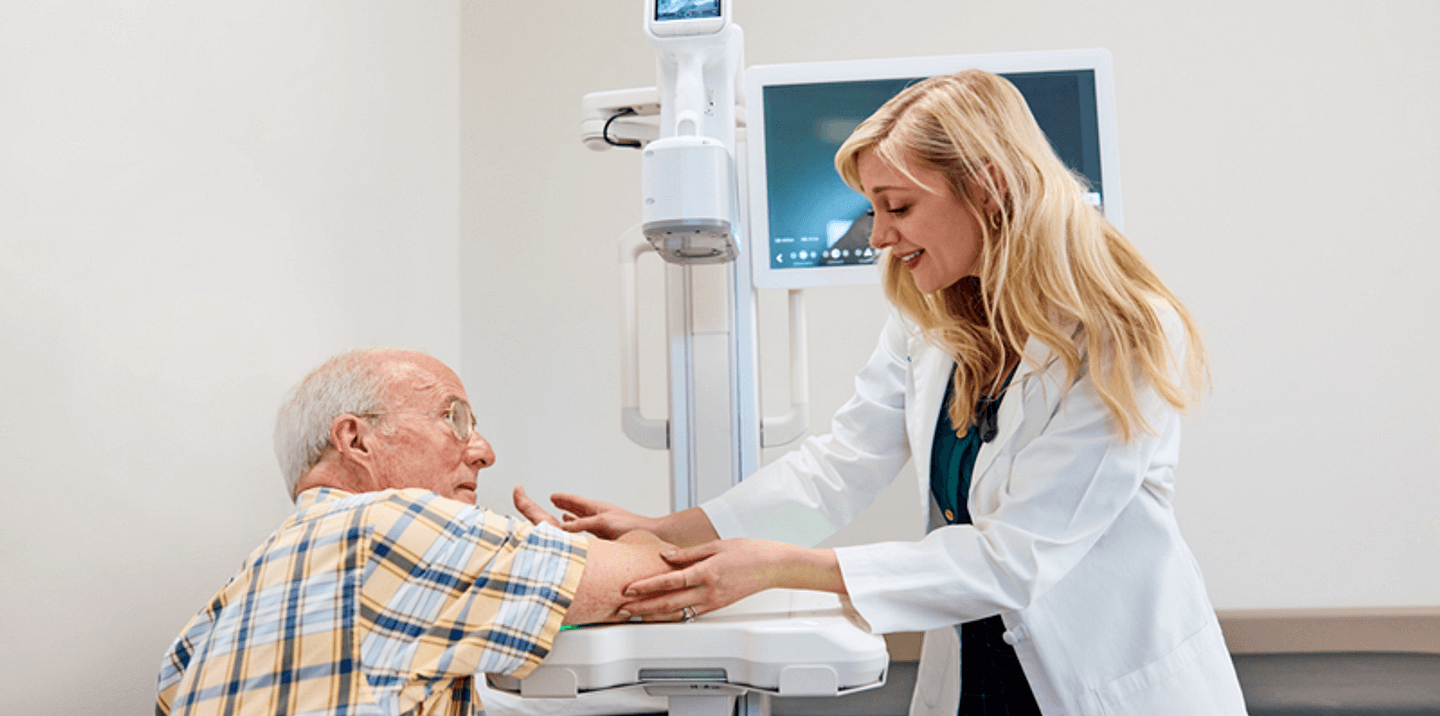
The OXOS Medical MC2 is one example of how several of these developments can be combined in a portable imaging system. The MC2 combines wireless imaging at the point of need with a digital detector, automatic collimation, positioning safeguards, and four imaging modes that include dynamic digital radiography.
How Newer X-ray Systems Address Radiation and Repeat Imaging
Since their inception, the biggest risk associated with X-ray imaging has been that it requires exposing patients and providers to ionizing radiation, which can have serious health effects. That’s why the goal of X-ray imaging is to produce an image that helps providers diagnose and treat patients more accurately while using the lowest reasonable exposure dose and number of exposures. The IAEA explains that image quality and radiation dose must be balanced, meaning that image quality does not need to be perfect. Still, it must be adequate for the intended clinical assessment.
Newer systems support that process through features such as:
- Automatic collimation to help limit the X-ray field.
- Exposure settings that support dose optimization.
- Positioning and alignment tools.
- Immediate image display for review at the point of care.
- Image-processing tools that can reduce noise or compensate for artifacts.
That said, there will likely be situations that require repeated imaging. Human factors like position errors, motion, and incorrect technique, as well as artifacts or incomplete views, may require taking multiple images, but the goal is to reduce those incidents.
An example of a new X-ray device that aims to address these issues is again, the OXOS Medical MC2. It does so through automatic collimation, positioning safeguards, and immediate digital image review. These features can help operators identify problems earlier, but they do not replace the need for trained staff, appropriate technique, quality control, or qualified interpretation, nor can they completely eliminate the possibility of a missed finding.
What the Latest Portable X-ray Technology Can Do Beyond Static Images
Digital radiography is only one part of current imaging practices. Some portable systems, like the MC2, go beyond producing a traditional static X-ray image. They can also support:
- Dynamic digital radiography, which captures a sequence of images that show anatomical movement over time.
- Fluoroscopy, which provides a live, moving video of the inside of a patient’s body.
- Photography, which captures non-radiation images for documentation and positioning.
These modes serve different clinical purposes. For example, a sports medicine team may need static extremity images, while an orthopedic practice may need to see real-time weight-bearing views, and a field-care team may need rapid radiography and digital image review.
Portable X-ray Technology’s Impact on Healthcare
Access remains one of the biggest challenges1 facing healthcare professionals and systems today. For that reason, portable imaging like the MC2 has the potential to provide a solution for situations where a traditional, fixed radiology suite is far away, difficult to get to, or impractical for the patient’s condition.
For example, a clinic in rural Iowa without the resources, specialists, or space for an X-ray suite can use a portable imaging device to evaluate patients instead of sending them to another facility. Similarly, correctional facilities can avoid unnecessary and difficult-to-coordinate patient transportation if they have an on-site imaging device. Portable X-rays may also be helpful for military and emergency healthcare teams that need equipment that’s easy to pack up, transport, and assemble on a moment's notice. These are also the settings where telemedicine can help connect local care teams with remote specialists. Portable imaging gives a telehealth visit clinical information that video alone cannot provide.
X-ray Technology for Remote Healthcare
Portable X-ray equipment like the MC2 can also benefit telehealth and remote healthcare. A local clinician can examine a patient, capture an image, and share it with a remote specialist, who can review it along with the patient’s history, symptoms, and other findings. Hearing from a specialist can help the local team determine whether the patient can continue to be seen at the current site or if they need additional evaluation elsewhere. This same functionality applies to portable X-ray for virtual care.
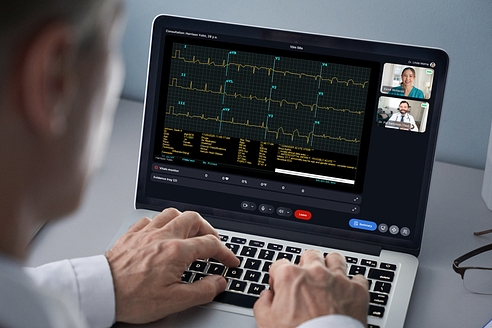
A platform such as eNcounter® Clinical Care can bring diagnostic data into a telehealth consultation, allowing the remote provider to review the image during the same visit. The exact process depends on the organization’s image storage, network configuration, documentation, and interoperability requirements.
1 Jamil H, Tariq W, Ameer MA, et al. Interventional radiology in low- and middle-income countries. Ann Med Surg (Lond). 2022;77:103594. doi:10.1016/j.amsu.2022.103594
What Organizations Should Evaluate Before Deployment
Before selecting a portable imaging system, organizations should confirm:
- Which body parts and procedures they intend to use the system for.
- Whether they require static, dynamic, or real-time imaging.
- How the system supports positioning, collimation, and image review.
- What training and competency requirements apply to device operators.
- How they plan on managing radiation procedures, local regulations, and quality control.
- Whether the equipment integrates with existing image storage and documentation protocols and with the organization’s existing telehealth or telemedicine platform.
- Whether the system includes or addresses maintenance, troubleshooting, accessories, and technical support.
These questions can assist buyers in evaluating portable imaging as part of their overall care model.
Add Portable Imaging to Your Care Model
The latest X-ray technology is most useful when it supports the full path from imaging to qualified review and clinical documentation, and the OXOS Medical MC2 does just that. It brings wireless imaging to rural, federal, military, emergency, correctional, and other distributed-care environments. It combines radiography, dynamic digital radiography, fluoroscopy, and photography in a system that can travel to patients rather than the other way around.
Through GlobalMed’s partnership with OXOS, the MC2 can integrate into a broader telehealth infrastructure. GlobalMed’s eNcounter® platform connects patients, local clinicians, remote specialists, and diagnostic information all during the same appointment. Our secure, fully integrated platform connects patients and providers to clinically exceptional care wherever they are.